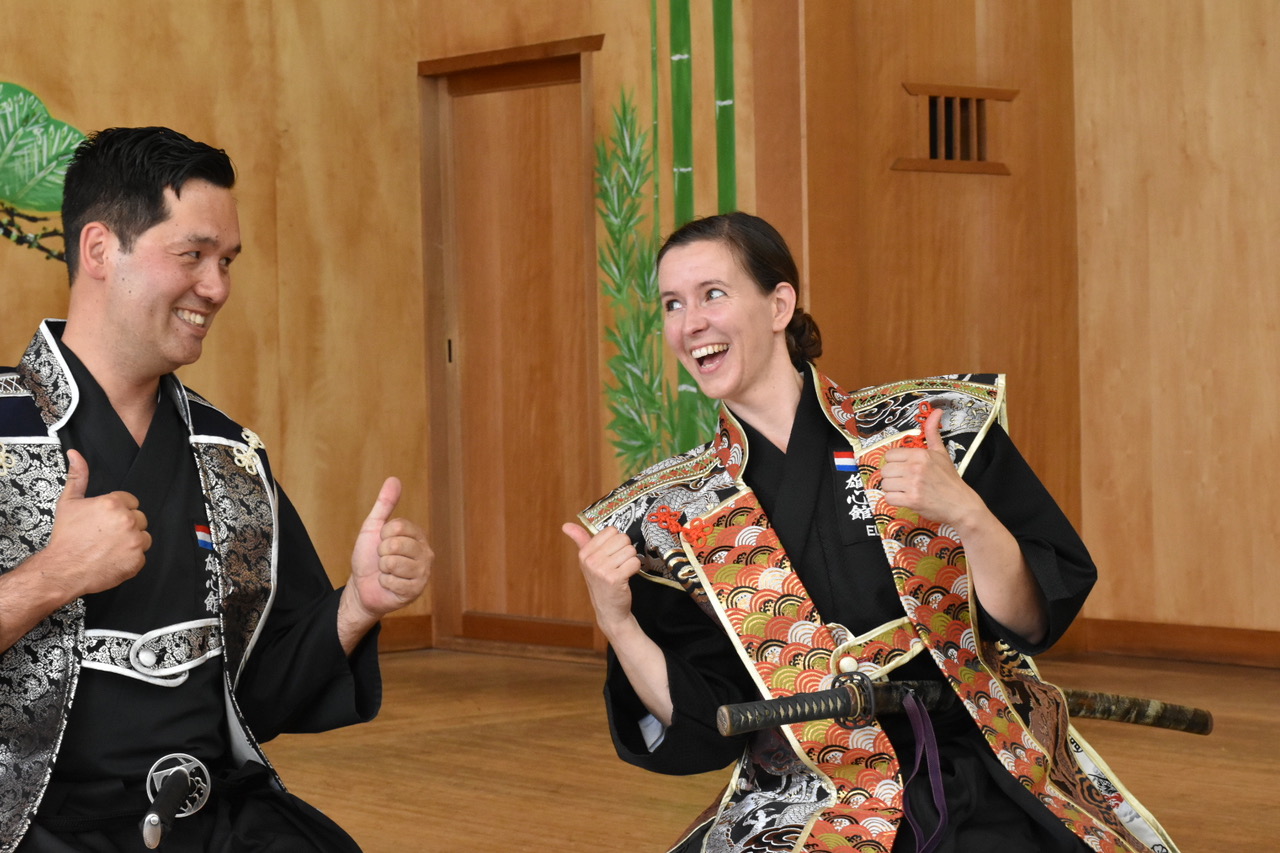



Most visitors to Japan never get closer to the samurai than a museum display case. This experience puts a sword in your hand.
Iaido is the Japanese martial art of the sword draw — not combat, but something closer to moving meditation. Where kendo is about fighting an opponent, Iaido is about fighting yourself: training the mind to be utterly present, the body to move without hesitation, and the spirit to remain calm in the moment of action. A single draw, executed with complete focus, is considered a lifetime’s study. That philosophy is what you will begin to feel in your 90 minutes here.
Your instructor has dedicated her life to this art and holds the 8th dan — Japan’s highest attainable rank in Iaido, held by only a handful of people in the entire country. She teaches with the patience of someone who has spent decades watching beginners discover, often to their surprise, that they are capable of more stillness and precision than they imagined.
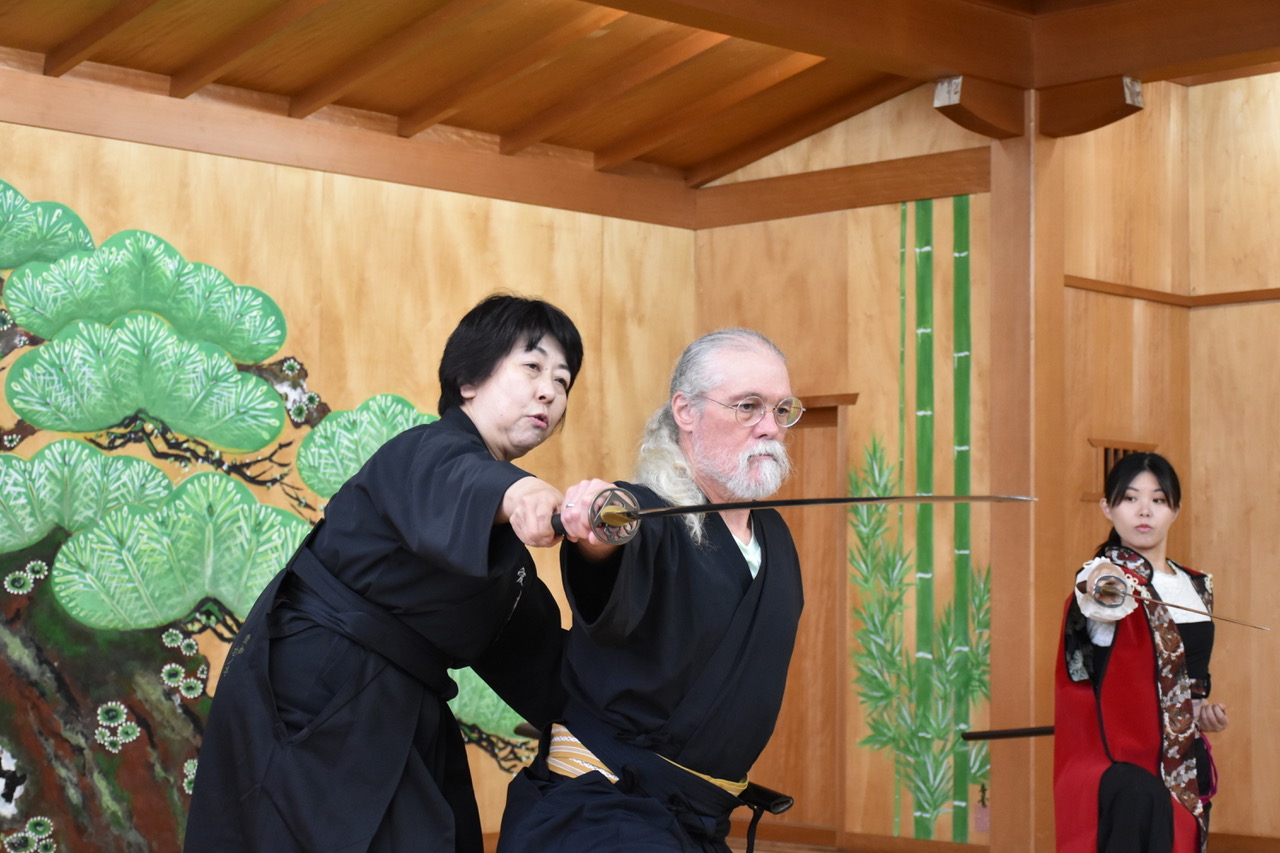
The setting matches the gravity of the art. The Sakae Nohgaku-do is a working Noh theater in the center of Nagoya — a spare, atmospheric space where the architecture itself teaches you something about restraint. You will practice on the dojo floor and, at the close of the session, step onto the Noh stage to perform the sequence you have learned. The silence of that stage is something most people never forget.
No experience is needed. No particular fitness level is required. What you bring is curiosity — and you will leave with a rare, tangible sense of what it once meant to carry a sword not as a weapon, but as a way of life.
Your English-speaking guide is waiting outside the Sakae Nohgaku Building— a short walk from Sa kae Station, right in the heart of the city. From the outside it looks like an ordinary building. The building is a lively mixed-use space housing boutiques, select shops, bars, and creative studios. Tucked within it, the Noh theater feels like a discovery — a place of extraordinary stillness in the middle of an ordinary, bustling building. That contrast sets the tone for everything that follows.
Change into Your Practice Kimono
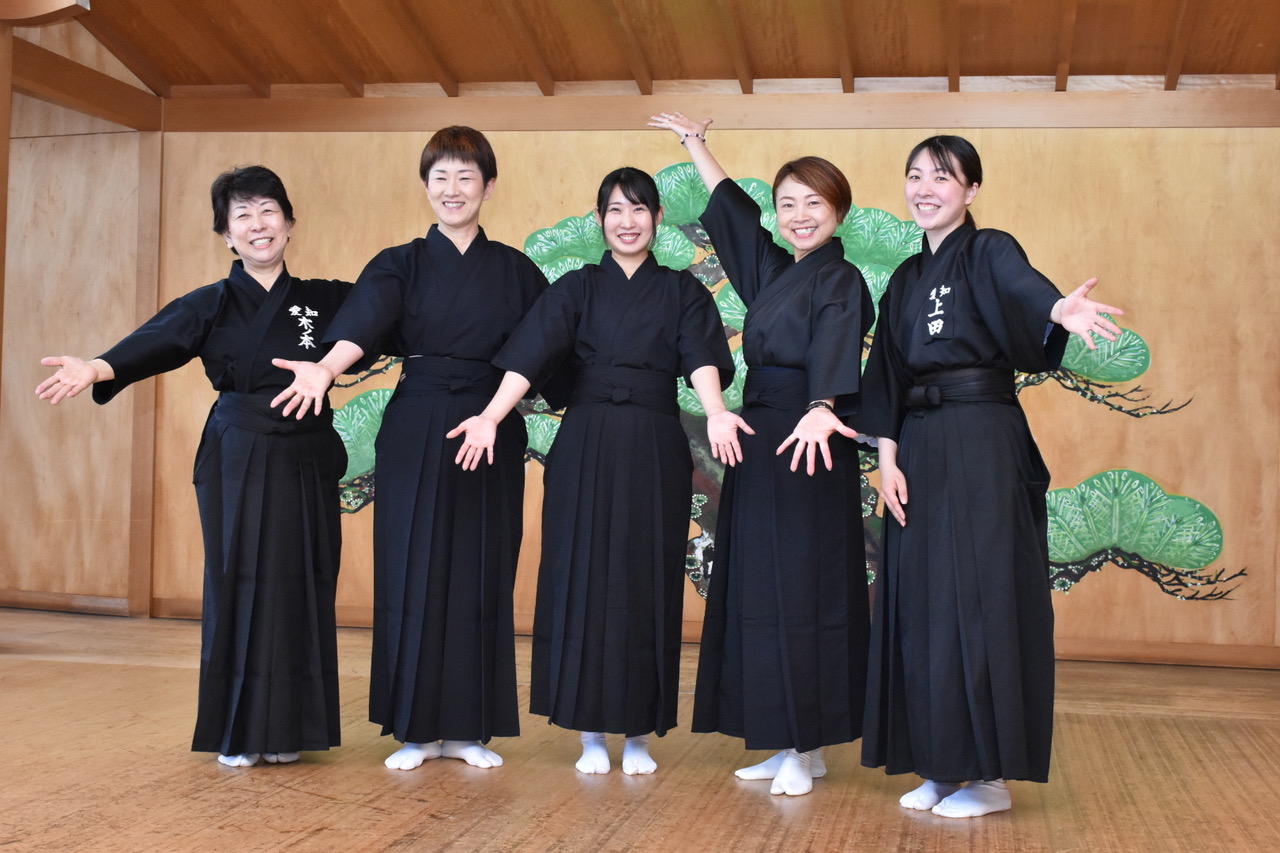
Before any instruction begins, you change into a full Iaido practice uniform — dogi jacket, obi belt, and tabi socks, all provided. It sounds like a small thing. It isn’t. The moment you tie the obi and feel the fabric settle, something in your posture changes without anyone telling you to stand differently. Your guide will explain the significance of each garment and why the act of dressing, in Japanese martial arts, is itself a form of preparation.
Learn What Iaido Actually Is
Your swordmaster takes a moment before the first sword is touched. She explains what Iaido is — and crucially, what it is not. This is not about learning to fight. Iaido is a discipline built around a single action: drawing the sword, completing a precise sequence of cuts, and returning it to the scabbard. Every movement is deliberate, every breath matters. Samurai practiced this not to defeat enemies, but to train the mind to act without panic, hesitation, or aggression. That is what you are about to learn.
Pick Up the Sword and Begin
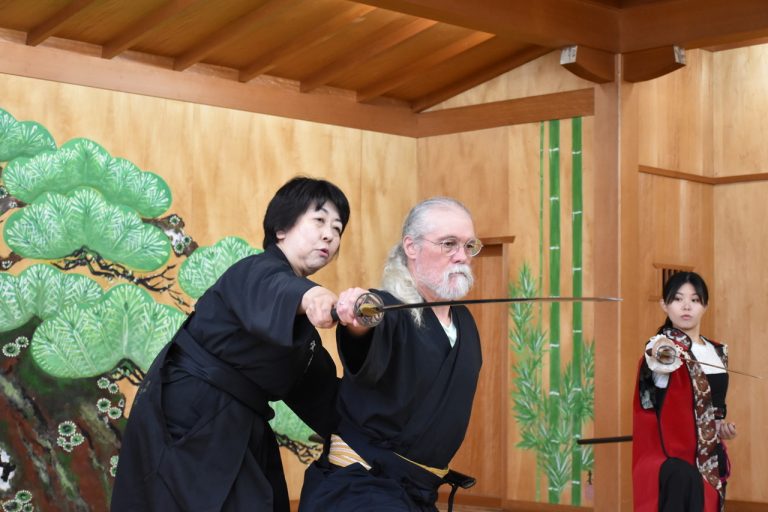
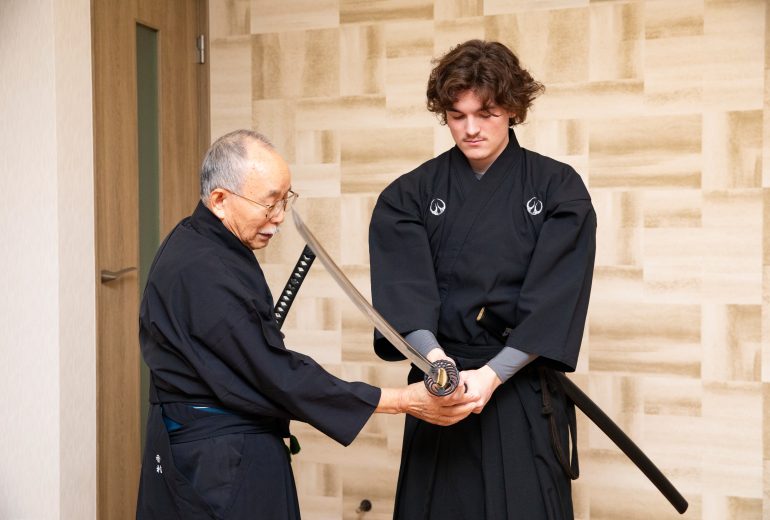
Now the practice sword is in your hands — and it is heavier than you expect. Your swordmaster guides you through the fundamentals at your pace: how to hold the grip, how to stand, how to draw cleanly, how to move through the foundational sequence known as Sanpogiri — the three-direction cut that every Iaido student learns first. She corrects your angle, adjusts your grip, and offers the kind of precise, unhurried feedback that only comes from decades of practice. You will make mistakes. That is exactly the point.
Take the Noh Stage
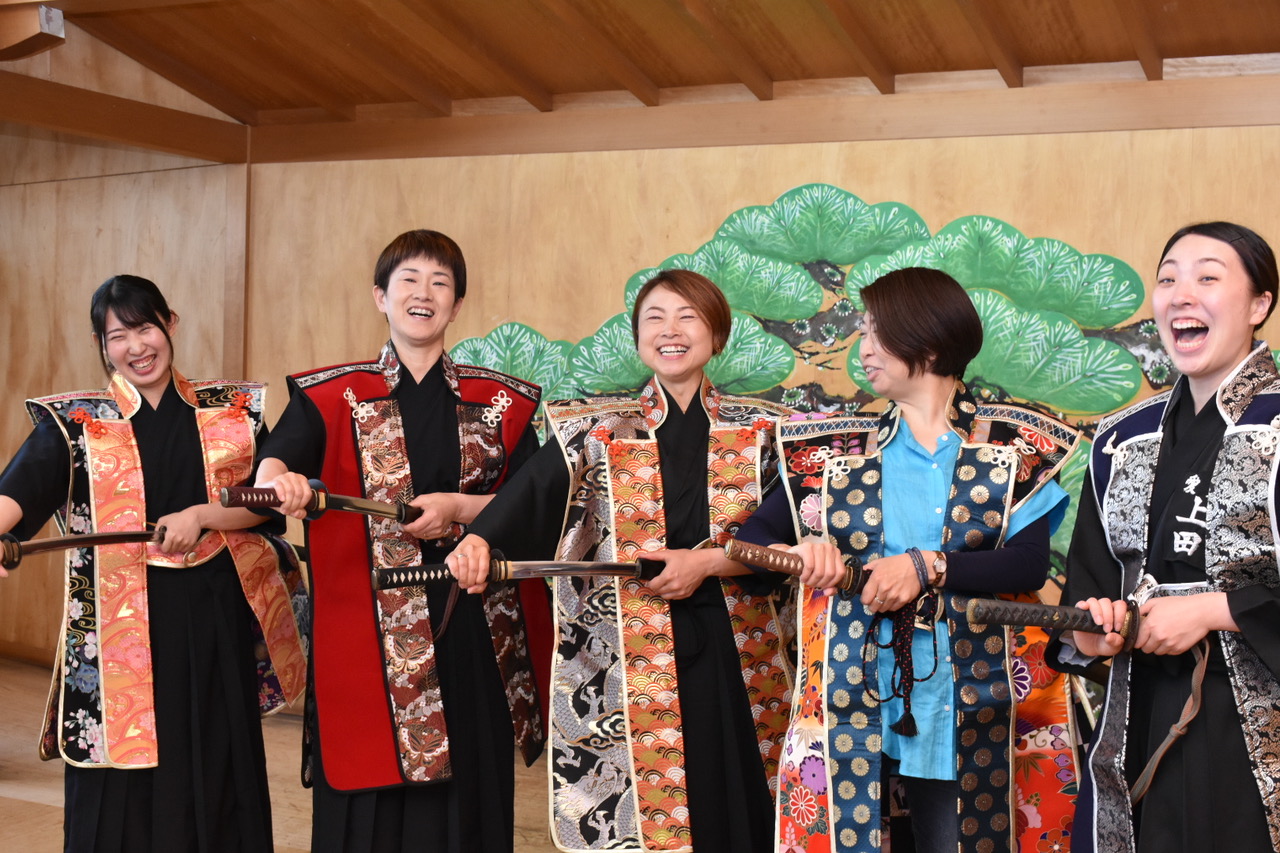
This is the moment the whole session has been building toward. You walk onto the Noh stage — polished wood, open space, the kind of quiet that seems to have weight — and perform your Sanpogiri sequence. No audience of strangers judging you; just the stage, the sword, and what you have learned in the last hour. After the performance, take as long as you like with photographs in costume. Few images from a Japan trip will look quite like this one.
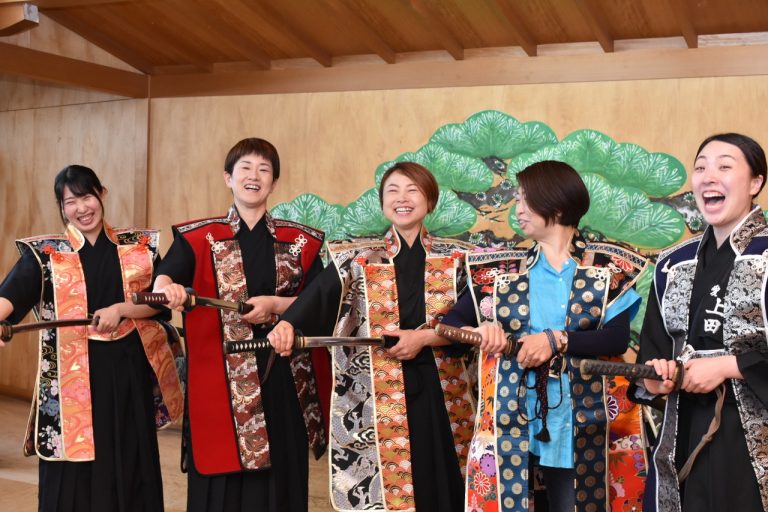
You return the equipment, change back into your own clothes, and step out into the city.
The Sakae shopping district is right outside — the contrast is part of the experience. You have just done something that most visitors to Japan, and many Japanese people themselves, never do. That feeling is yours to keep.
In front of Sakae Nogaku Building
This experience is booked on request. Responses are made to requests within 5 days.
| Cancellation Date | Cancellation Fee |
|---|---|
| No-show or cancellation after tour departure | 100% of the tour price |
| On the tour date | 50% of the tour price |
| 1 day prior to the tour date | 40% of the tour price |
| 2 to 7 days prior to the tour date | 30% of the tour price |
| 8 to 10 days prior to the tour date | 20% of the tour price |
| 11 or more days prior to the tour date | None |
Sakae Nogaku-do (The 4th floor of Sakae Nogaku Building)