
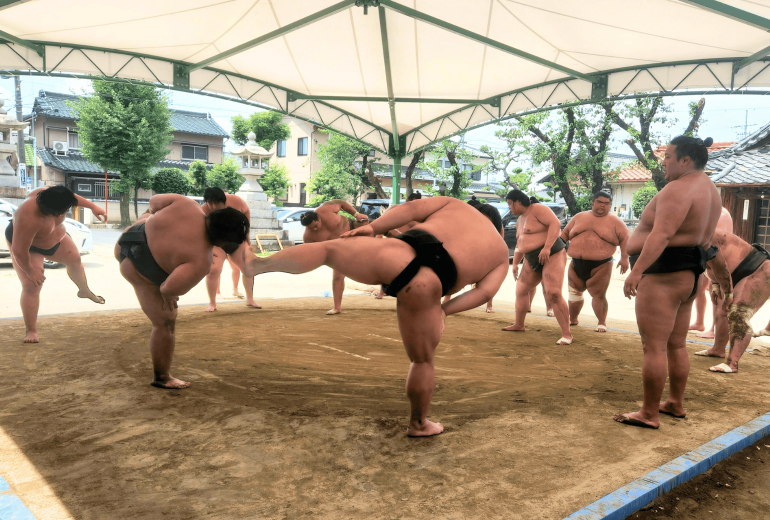
When you search for a sumo stable visit, you’re likely asking practical questions: Can I actually watch morning practice? Where can I do this—only Tokyo, or other cities too? What are the rules? Can I join without speaking Japanese, and more importantly, without accidentally being disrespectful?
But there’s often something deeper you’re hoping for: an authentic sumo experience when tournaments aren’t happening, a chance to witness real training rather than a tourist show, and clarity about what else you can experience beyond just watching practice.
This guide answers both. You’ll learn:
The short answer: yes, stable visits are possible—but timing, location, and approach matter.
Jump to the section you need:
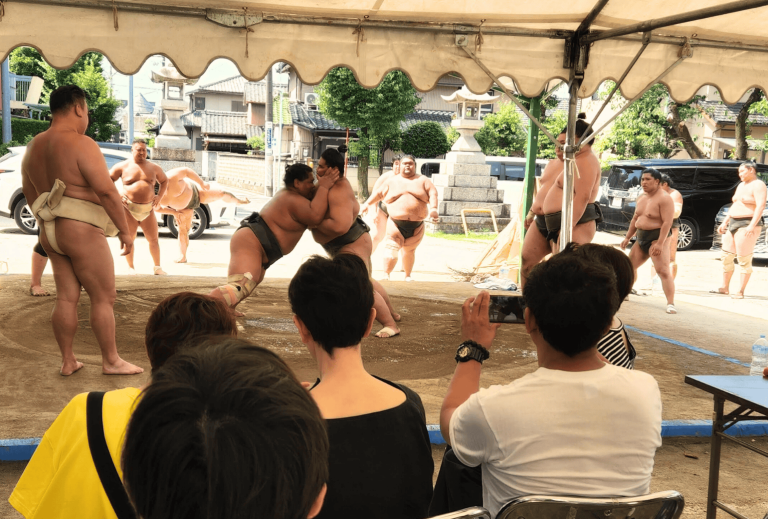
To understand why morning training feels so special, start with the place where it happens.
A sumo stable—called a heya—isn’t just a gym. It’s like a family where wrestlers live, eat, and structure their entire lives around training. Daily routines follow a strict hierarchy based on seniority: younger wrestlers serve their seniors, everyone follows precise schedules, and discipline shapes everything from meals to sleep.
Access to stables is carefully controlled because these are sacred spaces where serious training takes place. The restrictions protect the training environment itself—the focus, privacy, and respect required when athletes are pushing their limits every day.
Morning practice—asa-geiko—starts around dawn. Unlike tournament matches, this isn’t designed for spectators. It’s raw, focused preparation. Training begins with fundamentals: shiko (leg stomps) and suriashi (sliding footwork), building into powerful collision drills that shake the floor and send dust into the air.
The session unfolds in near silence, punctuated only by occasional instruction from the stable masters. No commentary for spectators, no applause—just breathing, impact, and concentration. Junior wrestlers practice first, with higher-ranked wrestlers gradually joining as the morning progresses. Watching it feels less like a sporting event and more like witnessing devotion in motion.
Stable visits aren’t casually available, and that’s part of what makes them meaningful. Some stables occasionally open training to the public, others require advance arrangements, and many don’t allow visits at all. Access is conditional and limited.
What makes it compelling is authenticity. You’re not watching a performance designed for tourists. You’re witnessing training that exists for the wrestlers alone. For many travelers, this shifts how they understand Japan—not as a collection of famous sights, but as a living culture shaped by discipline, hierarchy, and restraint.
To understand why access to sumo training is treated with such reverence, it helps to know sumo’s origins. Sumo began as a Shinto ritual—an offering to the gods for bountiful harvests and peace. The dohyo (ring) itself is considered sacred ground, which is why wrestlers perform purification rituals like throwing salt before each bout, and why certain traditions are strictly maintained.
This spiritual foundation explains why training spaces command deep respect. You’re not just entering a gym; you’re stepping into a tradition with centuries of sacred history behind it.
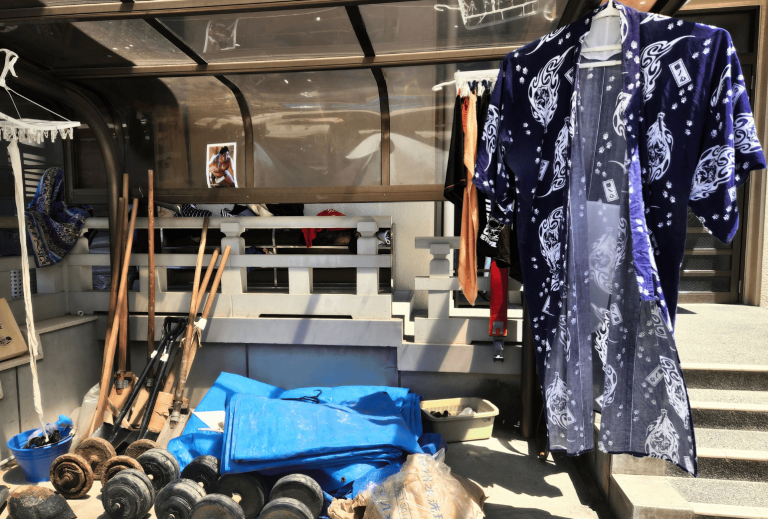
Observing practice isn’t just visual—it’s immersive. Here’s what engages your senses during those quiet, intense hours.
The first thing you notice is sound: the deep thud of bodies colliding, the rhythmic tremor of feet striking the ground, and—often—the sharp, repetitive rhythm of hands hitting the teppō-bashira (wooden training post) during thrusting drills.
Then there’s the scent. The sweet, distinctive aroma of bintsuke hair oil fills the air—for many Japanese people, this is the signature smell of sumo wrestlers—mixing with earth, humidity, and the heat rising from the ring. This is a full sensory experience that no video or photograph captures.
During practice, there’s almost no conversation. Silence isn’t emptiness; it’s structure. Hierarchy is visible everywhere: senior wrestlers lead while juniors observe, assist, and absorb. Respect is communicated through posture, timing, and restraint rather than words.
This is one of the clearest ways to understand that sumo isn’t only a sport, but a tradition shaped by discipline, etiquette, and a clearly defined social order.
A tournament bout may last only seconds. Training continues for hours. Movements are repeated thousands of times, pushing the body beyond comfort. Watching this process reframes sumo wrestlers not as entertainers, but as elite athletes forged through endurance and repetition.
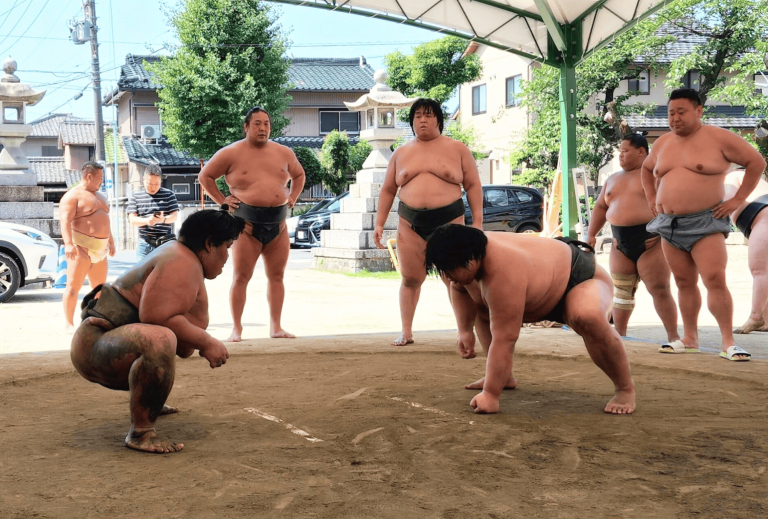
Not all times of year offer the same opportunities. Understanding the sumo calendar helps you plan for the best experience.
Sumo follows a fixed annual calendar with six major tournaments (honbasho), each lasting 15 days:
This schedule shapes when and where you can experience morning practice. During tournament periods, wrestlers follow competition routines and practice viewing is generally not available. The best opportunities appear in the weeks between tournaments—particularly in the lead-up to regional tournaments (Osaka, Nagoya, and Fukuoka), when stables relocate for pre-tournament training camps.
Most sumo stables are permanently based in Tokyo, and some do offer limited practice viewing under specific conditions. However, timing matters. Practice viewing is generally not available during tournament days, whether in Tokyo or the host city, because wrestlers follow a different routine focused on competition and recovery.
Opportunities often appear outside tournament periods. Interestingly, regional pre-tournament training camps tend to be more accessible than Tokyo stables—more stables open their practice to the public during these camps. In the weeks before regional tournaments, wrestlers relocate to temporary lodgings, and this is when viewing opportunities increase.
Nagoya is our home base, and July is particularly special here. Ahead of the Nagoya Grand Sumo Tournament, wrestlers from across Japan arrive in the city for preparation. For a few weeks, Nagoya quietly transforms into a sumo town, and it’s not unusual to see wrestlers in yukata around the city.
This is when we run our Nagoya Morning Sumo Practice Tour, on a limited number of days before the tournament begins.
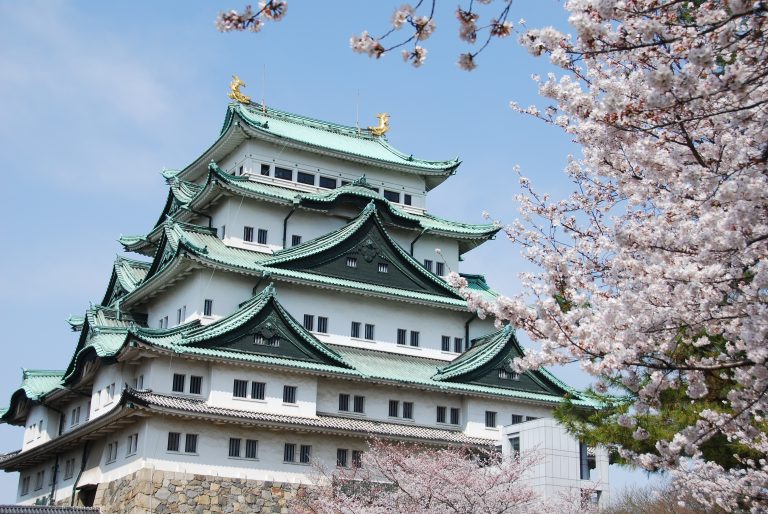
Outside Tokyo, some of the most memorable stable-viewing opportunities happen during pre-tournament camps. These create conditions hard to replicate in regular Tokyo stables: heightened focus, unique locations, and a very short window when observation may be possible. Within that broader context, Nagoya offers a particularly compelling setting.
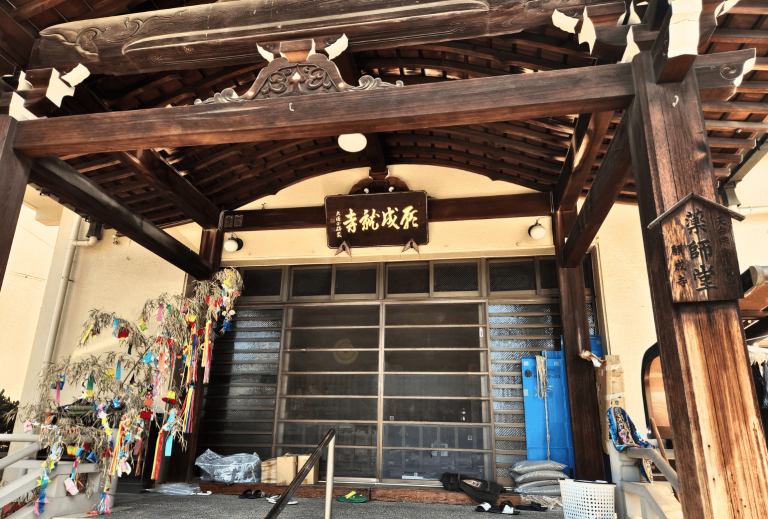
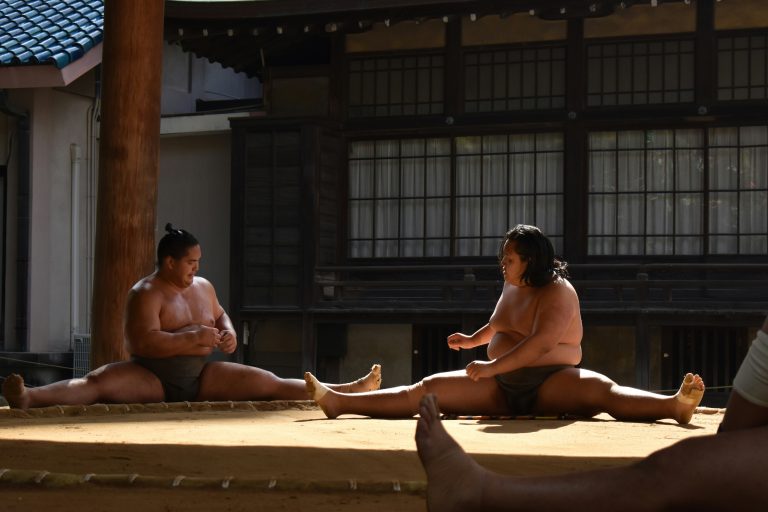
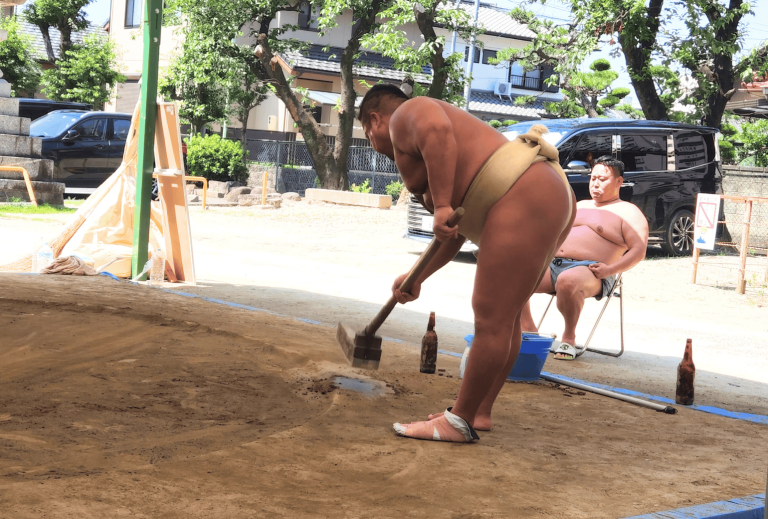
In regional tournament cities, training camps are often hosted in temples, shrines, schools, or company facilities—places that can accommodate large groups and early-morning routines. These locations feel very different from urban stables. The atmosphere—quiet grounds, incense, morning light—makes training intensity feel even more striking.
In our tour, the stable lodges at a temple, creating a rare scene: temple grounds, wrestlers, and morning training—a deeply evocative and distinctly Japanese moment.
Unlike permanent stables, training camps are temporary and more open in feeling. The atmosphere is focused and intense, yet more immediate for visitors. Once the tournament begins, this environment disappears entirely, making these mornings impossible to recreate.
In most regional tournament cities, if practice viewing is possible at all, it’s usually offered throughout the pre-tournament training period. However, our Nagoya program runs on just four dates: July 6–9, 2026.
Why this specific window? Our tour includes special arrangements that aren’t part of typical practice viewing: a dedicated photo session with the wrestlers and chanko nabe prepared exclusively for our guests. These personal touches require coordination with the stable, and we’ve found this four-day period offers the ideal balance—capturing the final calm before competition when concentration is highest, while allowing us to provide these enhanced experiences. Availability is extremely limited, so early planning is essential.
Check availability for the 2026 Nagoya Morning Sumo Practice Tour
Nagoya isn’t overly crowded or heavily touristed. Located on the main Shinkansen line directly between Tokyo and Kyoto/Osaka, it fits naturally into many itineraries. The city also offers enough depth that a visit doesn’t need to revolve around sumo alone.
A stable visit can be powerful even if you only observe. But many travelers want more than a glimpse—they want understanding, context, and a sense of welcome. A well-designed guided experience adds exactly that: smoother logistics, cultural explanation, and moments that are otherwise difficult to arrange on your own.
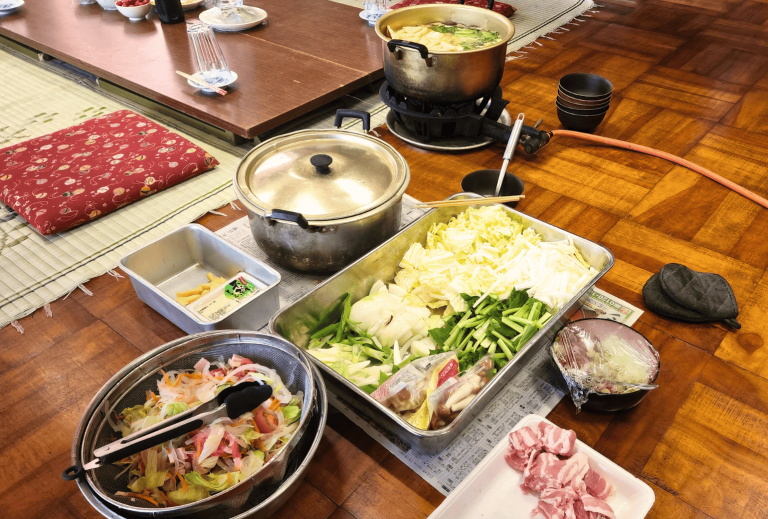
Chanko nabe is the everyday hot pot that sustains sumo life—high in protein, nutritious, and practical. In many stables, meals are prepared primarily by junior wrestlers as part of their daily responsibilities. Cooking isn’t separate from training; it reinforces hierarchy, teamwork, and care for the group. Eating itself is considered part of training—wrestlers consume large quantities to build and maintain their physique.
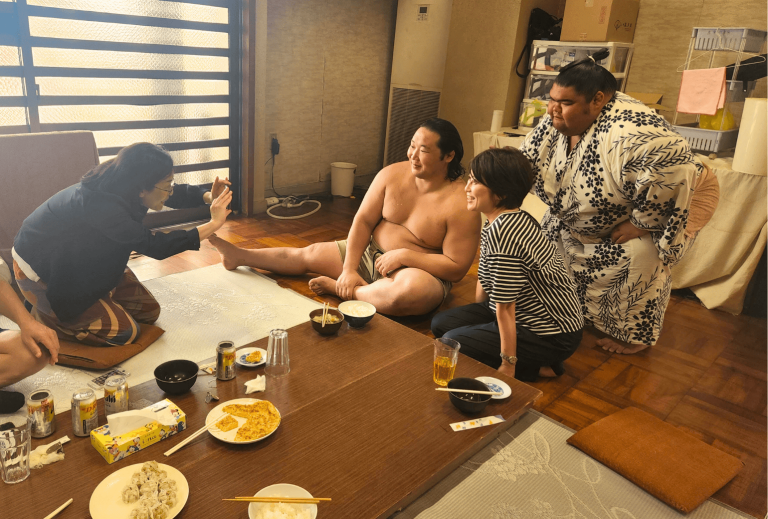
In our tour, you’ll share a chanko meal prepared by the wrestlers in the same lodging where training takes place. This offers insight into sumo life that no restaurant experience can replicate—it’s not just about the food, but about the communal ritual that bonds the stable together.

During practice, you cannot speak to or approach wrestlers, and even afterward, visitors often hesitate—unsure when or how it’s appropriate to ask for a photo. In our tour, a photo opportunity is arranged at an appropriate time after training, with clear guidance. This allows guests to capture the memory comfortably and respectfully.
Ready to experience it yourself? Our Nagoya Morning Sumo Practice Tour includes all these elements—from temple training to chanko lunch to photo opportunities.
Learn more about the Nagoya Morning Sumo Practice Tour
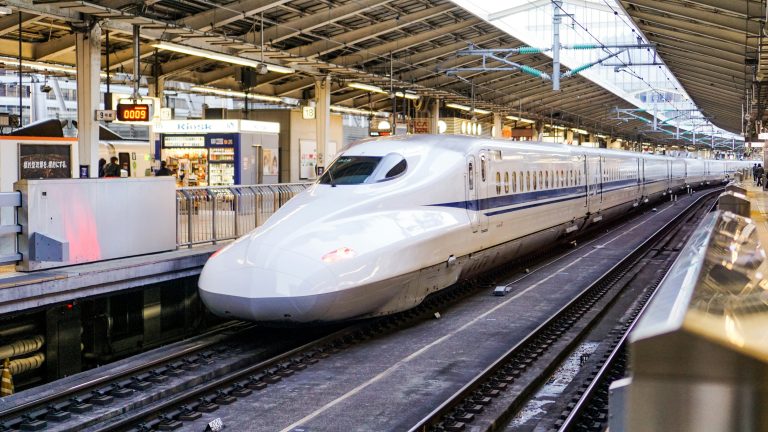
Nagoya often appears out of the way on a map, but it sits on Japan’s main travel corridor, making it surprisingly accessible from the country’s major destinations.
Nagoya is directly connected by Shinkansen:
For many travelers, it’s not a detour, but a natural stop.
Could you come from Tokyo or Kyoto/Osaka the same morning? Technically yes, but it requires very early departures and unnecessary stress. Staying overnight allows you to approach the experience calmly—and Nagoya offers plenty to enjoy before and after the visit.
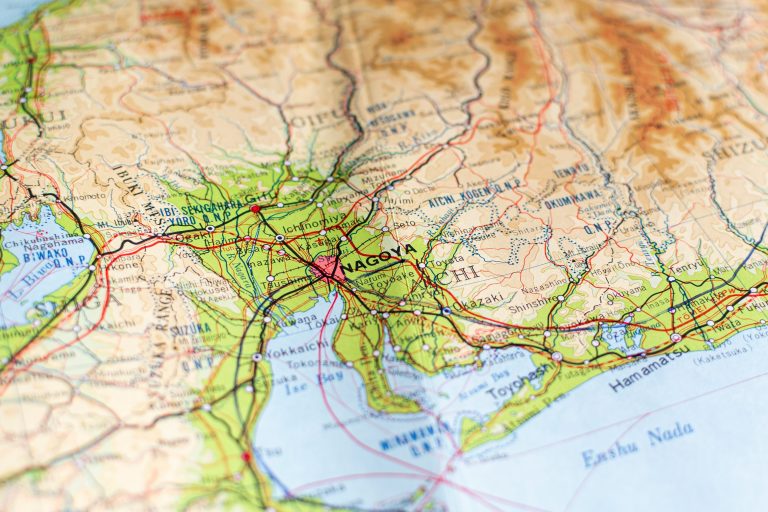
A stable visit works best when it feels integrated, not squeezed into a tight schedule. Nagoya’s location makes it flexible: it can be a one-night stopover or a short base for deeper exploration of the region.
Nagoya and its surrounding region easily justify three nights. From Nagoya, you can explore the city at a relaxed pace, take rewarding day trips to the Kiso Valley (including the historic post towns of Tsumago and Magome along the Nakasendo trail) or Ise, and enjoy a balance of cultural depth and logistical ease. A shorter stay is possible, but a longer one often delivers a richer experience.
Day 1: Arrive from Tokyo or Osaka. Visit the Toyota Commemorative Museum or SCMAGLEV and Railway Park. Enjoy local delicacies such as hitsumabushi (grilled eel served over rice with multiple ways to enjoy it—a Nagoya specialty).
Day 2: Early morning temple training and chanko lunch. Visit Nagoya Castle and Osu Shopping Street.
Day 3: Cultural craft experience such as lantern making or Arimatsu shibori tie-dyeing, then depart or continue onward.
Even when practice viewing is possible, logistics and etiquette can be challenging. Here’s why many travelers find guided experiences more rewarding than attempting to visit independently.
For regional pre-tournament training camps, reservations are often not required—practice viewing may be open to the public. However, finding information about lodging locations and public viewing hours is typically only available in Japanese.
In Tokyo, the situation is different: many stables require advance reservations, and some expect you to call the day before to confirm whether practice will take place.
Beyond logistics, many etiquette rules are unspoken. A misstep can create discomfort—for visitors and wrestlers alike. A guided visit removes uncertainty and allows you to focus fully on the experience.
Many stables and training lodgings are located in quiet residential areas, sometimes with limited signage or last-minute schedule changes. An experienced English guide navigates logistics smoothly, explains training and hierarchy, ensures respectful behavior, and acts as a trusted point of contact.
Stable visits are rare because they rely on trust. Respectful behavior helps protect that access for the future. Here are the key points to keep in mind. Specific rules may vary by stable, so always follow the instructions given by the stable master or your guide on the day of the visit.
No applause, cheering, or conversation during training. Silence is part of the discipline.
In many stables, photography during training is allowed without flash and from designated areas. Be mindful of camera noise—loud shutters can be distracting in a silent space. Choose modest, everyday clothing that respects the atmosphere, especially in temple settings.
Training takes place year-round, and comfort depends on the season and location. Regional training camps are often held outdoors, while home stables train indoors—but even indoor training halls typically have minimal heating since wrestlers generate their own heat through intense activity. Either way, you’ll be sitting still for extended periods.
In winter, dress in warm layers. For the July Nagoya camps in particular, morning sessions can be surprisingly hot and humid. Come prepared with water, towels, and sun protection.

A sumo stable visit is a unique experience, and many first-time visitors have similar questions. Here are a few practical things to know before you go.
It depends on the stable or tour. Some places set age limits. Our tour accepts children aged 7 and above, as visitors must remain quiet and still for extended periods.
Often yes, without flash, but rules vary. Always follow instructions and be mindful of camera noise.
Interaction is at the discretion of the stable master. In our tour, conversation is usually possible during the chanko meal, creating a more personal connection in a respectful environment.
Avoid extremely revealing clothing or hats inside the training area, especially in temple settings.
Absolutely. Morning practice is a visceral, sensory experience that anyone can appreciate—the sounds, atmosphere, and raw athleticism speak for themselves. However, without guided explanation, it’s easy to miss the deeper meaning behind what you’re witnessing: the hierarchy, the specific training techniques, the rituals, and the cultural context. A knowledgeable guide helps first-time visitors understand sumo at a level that goes far beyond what you’d learn from watching matches alone.
You’re drawn to quiet intensity, cultural depth, and seeing how sumo truly functions behind the scenes.
[CTA Button: View Nagoya Morning Sumo Practice Tour Details]
You prefer spectacle, ceremony, and large crowds.

I’m a nationally licensed English-speaking guide with over 10 years of experience leading tours across Japan. Growing up in Nagoya and having lived abroad, I bring both insider familiarity and an outsider’s curiosity to every trip.
Beyond guiding, I design and plan tours from the ground up — handling everything from itinerary building to logistics and on-the-ground coordination. That dual perspective, from both inside the experience and behind the scenes, shapes how I write about travel in Central Japan.