
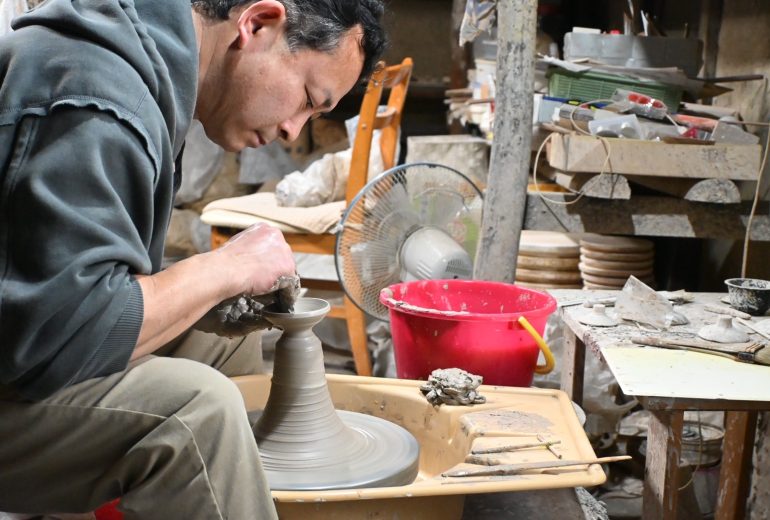
If you’re looking for a pottery town to visit in Japan, Tokoname deserves a place on your list. With some 900 years of ceramic history, it is one of Japan’s oldest pottery centers—but what makes it especially interesting today is that it is still very much a working town, where artisans continue to make everything from teapots and bonsai pots to contemporary tableware.
For travelers who like to look beyond the finished object—to meet the people who make it, understand how it is used, and see how a local craft connects with the place around it—Tokoname has plenty to discover.
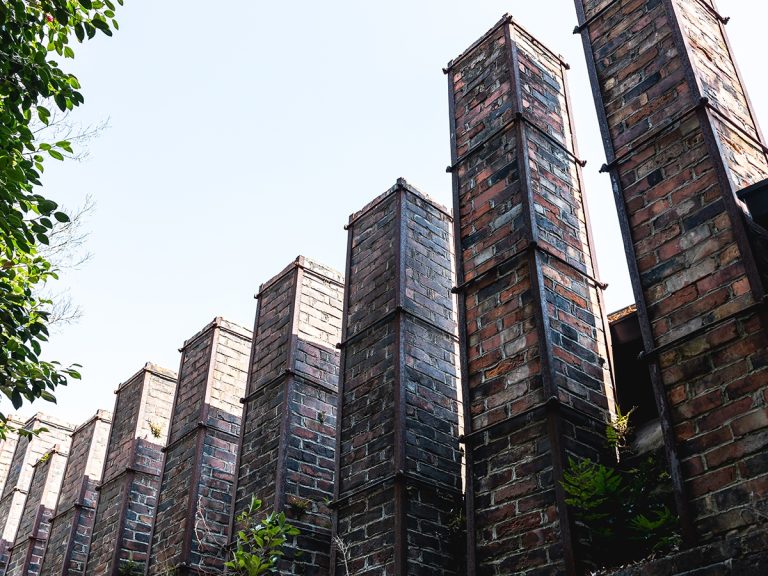
Tokoname is one of Japan’s Six Ancient Kilns, a group of pottery towns that have been firing ceramics almost continuously since the medieval period. Tokoname has been producing pottery continuously for roughly 900 years, one of the oldest ceramic traditions still active in Japan today.
What set the town apart was its location. Rich clay deposits, abundant fuel for the kilns, and direct access to the sea made Tokoname a natural hub for large-scale pottery production, and by the twelfth century, its jars and storage vessels were already being shipped across Japan by boat.
Tokoname has never been defined by a single style of art pottery. Instead, it has continually reshaped what it makes to match what people actually need. Large storage jars gave way to clay pipes and architectural tiles as Japan industrialized, and to the teapots that remain the town’s best-known product today, prized for the reddish, iron-rich clay that gives them their distinctive vermillion tone. Bonsai pots followed as the hobby grew in popularity through the twentieth century.
That history is not something you view from behind glass. Walk through Tokoname today and you’ll find working studios, not museum displays, where that same instinct for making what people need is still very much alive.
History explains why Tokoname makes pottery. Meeting its artisans explains what that actually looks like today. These are not museum exhibits behind glass, but working studios producing pieces people use every day, and every workshop has its own answer to what “making pottery in Tokoname” means.
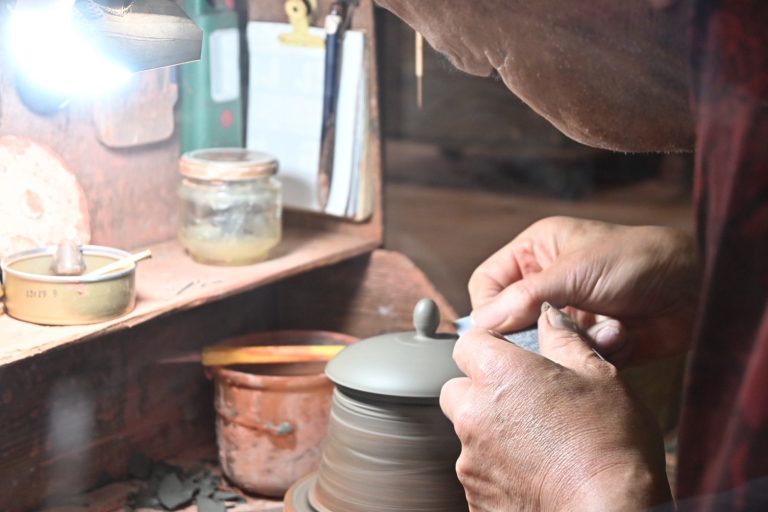
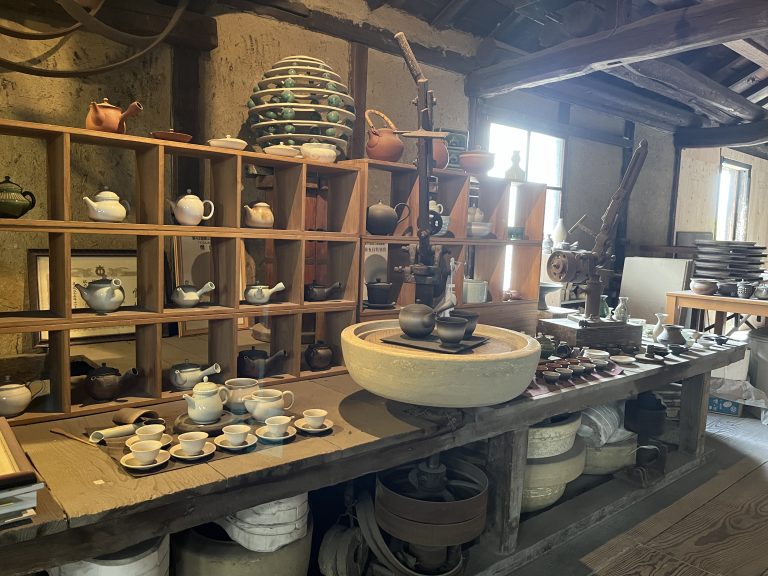
Nothing represents Tokoname quite like its kyusu, the small clay teapots that made the town famous. The local clay, worked into the deep red known as shudei, turned out to be ideally suited to teapots: fine-grained, iron-rich, and capable of holding a fine, precise shape. What looks like a simple object hides a surprising amount of skill, from the way the lid is ground to fit its pot to the angle of the spout that controls how the tea pours.
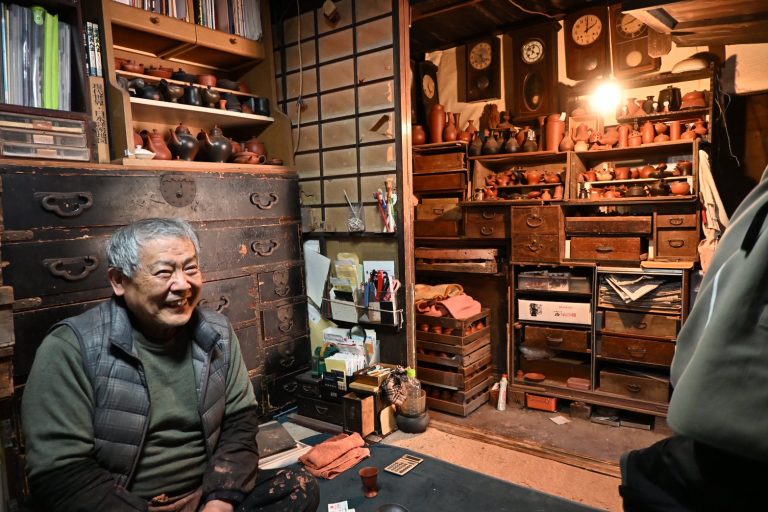
Visit a few different workshops and you start to see how differently “teapot maker” can be defined here. One workshop divides the process across specialists, using techniques like tobikanna, which carves a rhythmic pattern into the clay with a tool, and mogake, where wrapped seaweed leaves natural markings during firing. A veteran potter with more than sixty years behind him works alone, turning out playful, one-of-a-kind teapots in unexpected shapes and colors. Another maker has spent decades refining a flat teapot designed purely around function, giving tea leaves more room to unfurl and release their flavor.
Meeting the people behind these pieces, and hearing how they talk about their own work, tells you more about Tokoname’s teapot culture than any finished object on a shelf.
To meet several of these makers in person, one tour visits three different teapot studios in a single afternoon, each with its own take on the craft: Tokoname Pottery & Teapot Artisan Tour from Nagoya | Meet Three Master Craftsmen
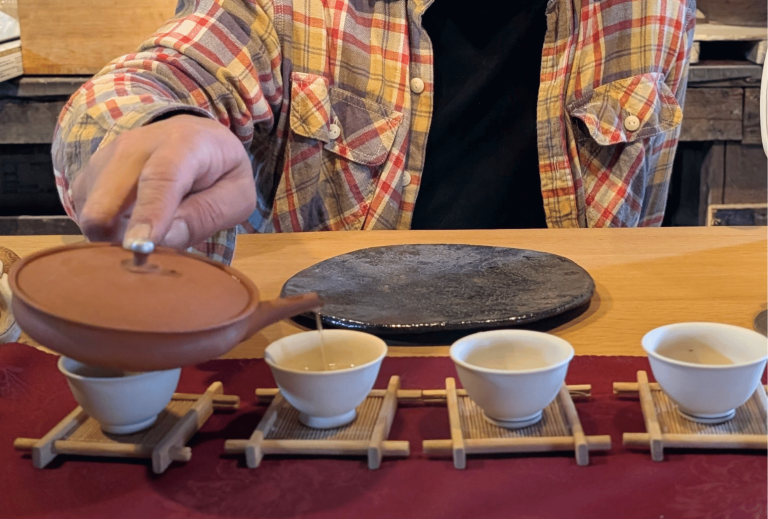
A kyusu is easy to admire as an object, but it was designed to be used, and using one changes how it looks to you. The shape of the pot, the clay it’s made from, and even small design choices like how flat or deep the body is all affect how the tea inside it tastes.
That flat-bodied teapot mentioned above is a good example: its shape exists to give tea leaves room to open fully, drawing out more flavor and aroma than a narrower pot would. Learning to brew tea with a kyusu, ideally guided by someone who makes them, turns an abstract appreciation for craftsmanship into something you can taste. It’s a short step from admiring an object to understanding why it was made the way it was.
For a chance to brew and taste tea guided directly by a teapot maker, one tour combines a private studio visit with a hands-on tea-brewing lesson: Tokoname Pottery & Teapots | Artisan Studio Visit, Japanese Tea Brewing & Town Stroll
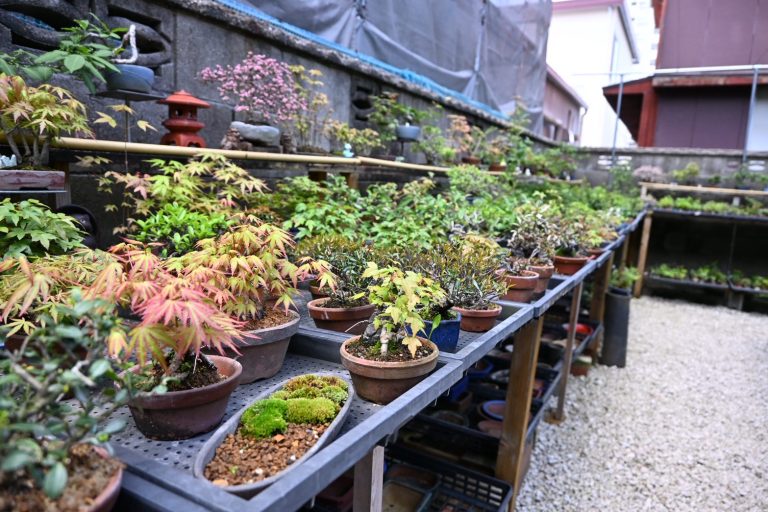
Teapots may be Tokoname’s best-known product, but they’re only one part of a much wider ceramics culture. The same clay and firing traditions that shaped kyusu have been put to strikingly different uses.
Bonsai pots are one of the biggest: Tokoname leads Japan in both the volume and value of bonsai pot production. Some workshops specialize in a single glaze, developing a rich, deep green over decades of experimentation. Others still use kata-oshi, a traditional mold-pressing technique that gives each pot a bold, textured pattern, and pair their showroom with an actual bonsai garden, so visitors can see how a well-matched pot and a well-grown tree complete each other.
Elsewhere, one workshop is the last in Tokoname still dedicated to large, unglazed fermentation crocks, the kind once used across Japan for miso, umeboshi (pickled plums), and pickles. As fewer households make these foods from scratch, this kind of pottery has become rarer than the teapots and bonsai pots that get more attention. Another studio has built a name working directly with chefs, developing tableware collections designed specifically to showcase food at its best, now used in some of Japan’s most acclaimed restaurants. And Tokoname has its contemporary side too: at least one internationally exhibited ceramic artist works from a home studio here, using the same clay in a completely different visual language.
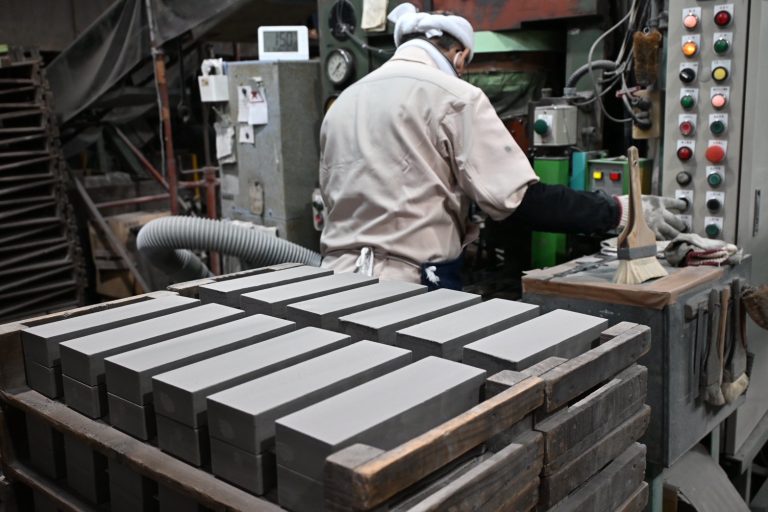
Even the town’s industrial instincts didn’t disappear along with the clay pipes. Tokoname’s ceramic expertise is also behind Japanese whetstones: one long-running manufacturer applies the same firing knowledge used for pottery to producing sharpening stones for chefs and craftspeople around the world, an unexpected detour for anyone who assumed Tokoname pottery meant just teapots and bonsai pots.
Anyone curious to see this side of Tokoname’s ceramics firsthand can meet three specialist bonsai pot artisans in a single tour: Tokoname Bonsai Pottery Journey | Meet Three Master Artisans — From Nagoya
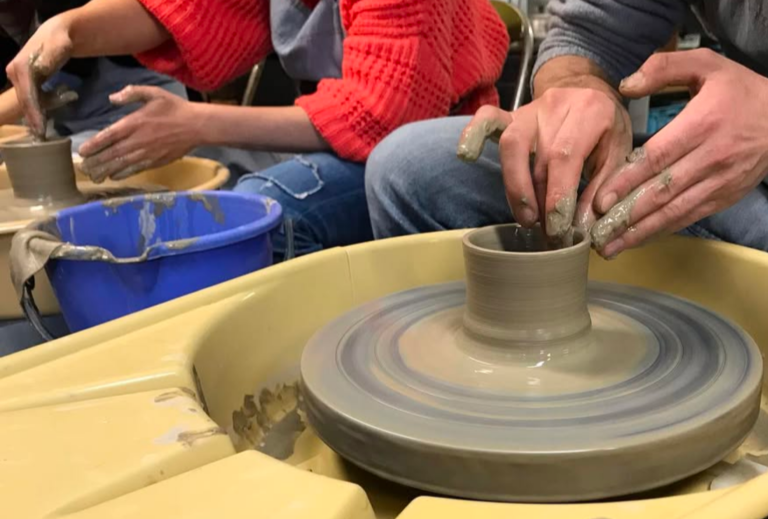
Watching a skilled potter work makes it look effortless, which is exactly why it’s worth trying yourself. Several Tokoname studios offer hands-on experiences where you shape your own piece under a maker’s guidance, whether that’s a general piece of pottery, a bonsai pot formed with a traditional mold, or your own small fermentation crock.
None of this is meant to turn you into a potter in an afternoon. It’s meant to make the difficulty, and the skill, of what you’ve just been watching suddenly very real. Most finished pieces are fired and shipped to you afterward, so the pottery experience becomes less a souvenir you take home and more a memory that arrives a few weeks later.
One full-day tour pairs a visit to a working teapot kiln with a hands-on pottery session at a century-old studio: Craft & Clay | Discover Tokoname’s Pottery Heritage and Teatime Traditions
For those drawn to bonsai specifically, another tour lets you shape your own bonsai pot under the guidance of a fifth-generation artisan: Tokoname Bonsai Pottery | Craft Your Own Bonsai Pot with a Master Artisan — From Nagoya
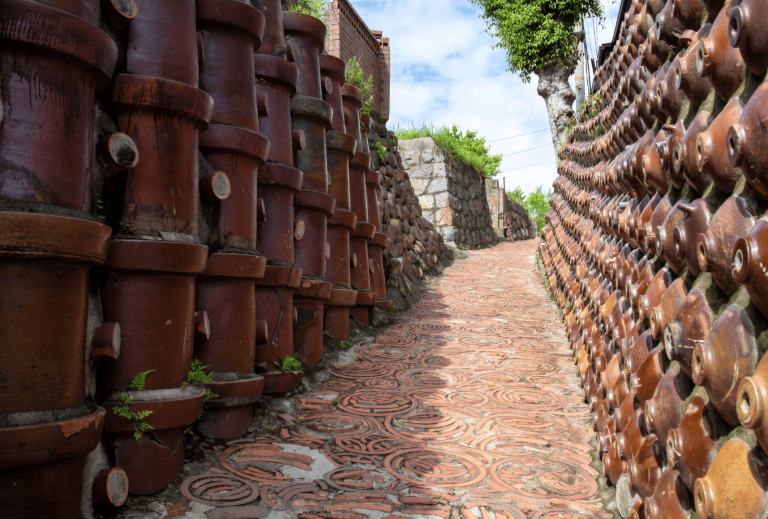
You’ve now seen how pottery is made in Tokoname today. Step outside, and you can see how that same industry shaped the town itself.
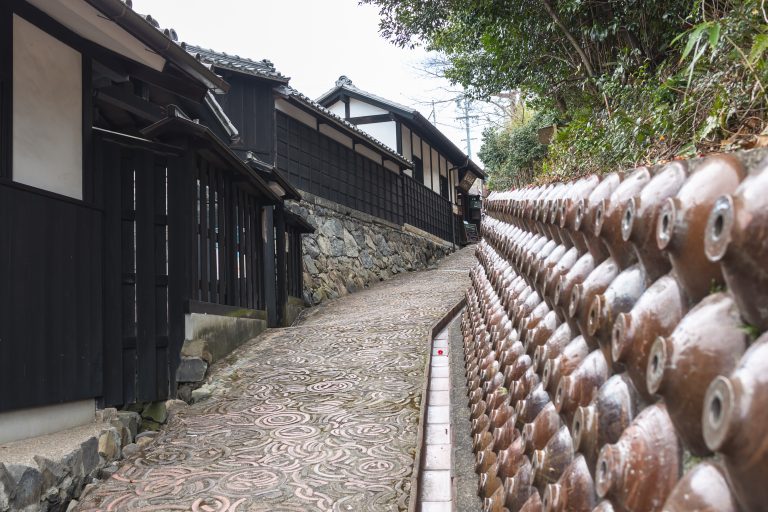
The Tokoname Pottery Path is the town’s signature walking route, an easy hour-long loop through what used to be its main kiln district. It passes Dokanzaka, a slope paved with discarded clay pipes and shochu bottles from a century of production, along with brick chimneys, an old climbing kiln, and the quiet shells of workshops and factories that have since closed.
None of this is presented as a series of individual landmarks to check off. Old pottery and clay pipes are simply built into the walls and alleyways, part of the everyday fabric of the town rather than curated exhibits. Walk it after visiting a working studio, and the connection is hard to miss: the industry you just saw firsthand is the same one that physically built this landscape.
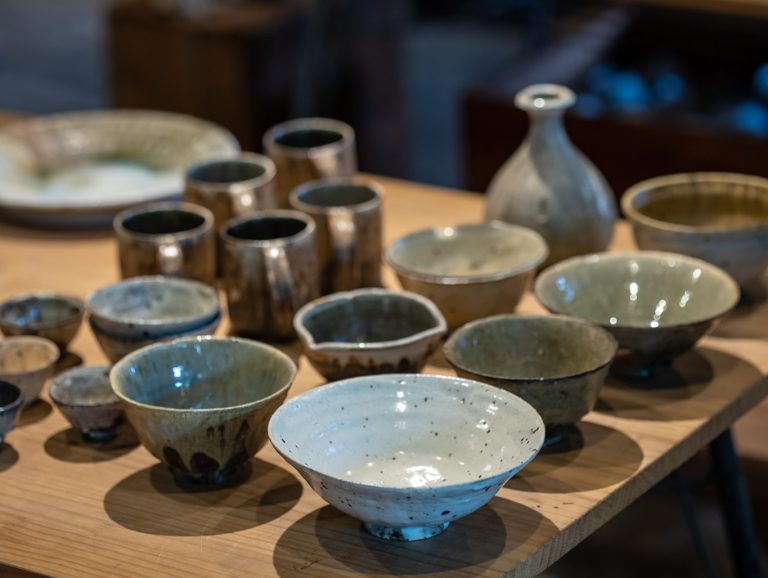
The Pottery Path is lined with small galleries, pottery shops, studios, and cafés, and it rewards wandering more than it rewards a fixed itinerary. It’s easy to get pulled off course by a shopfront that catches your eye, and both traditional and contemporary ceramics turn up side by side along the route.
Buying something here carries a bit more weight once you’ve met the people behind it. A cup or a small dish looks different once you understand the hands and decisions that shaped it.
To see that traditional-and-contemporary contrast up close, one tour pairs a visit to a veteran teapot maker with a private studio visit to a contemporary ceramic artist: Tokoname Pottery & Contemporary Art | Meet a Ceramic Artist & Master Teapot Artisan — From Nagoya
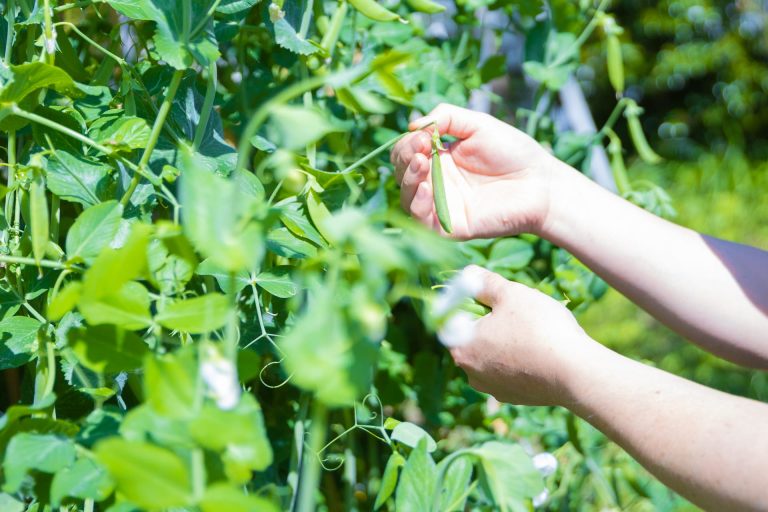
Tokoname’s identity isn’t limited to pottery. Its coastal, agricultural setting has shaped a rich food culture of its own.
Tokoname sits on the western coast of the Chita Peninsula, a region blessed with the sea on one side and fertile farmland on the other. That combination, along with a mild climate, has long supported a rich food culture, including a local sake brewery that has been producing in Tokoname since 1848.
The connections run deeper than a single glass of sake. At least one acclaimed local chef works directly with regional producers and even commissions custom tableware from Tokoname potters, so a dish, its plate, and its ingredients can all trace back to the same small stretch of coastline. Food and drink experiences like these are part of what makes the wider Chita Peninsula worth exploring, alongside its pottery.
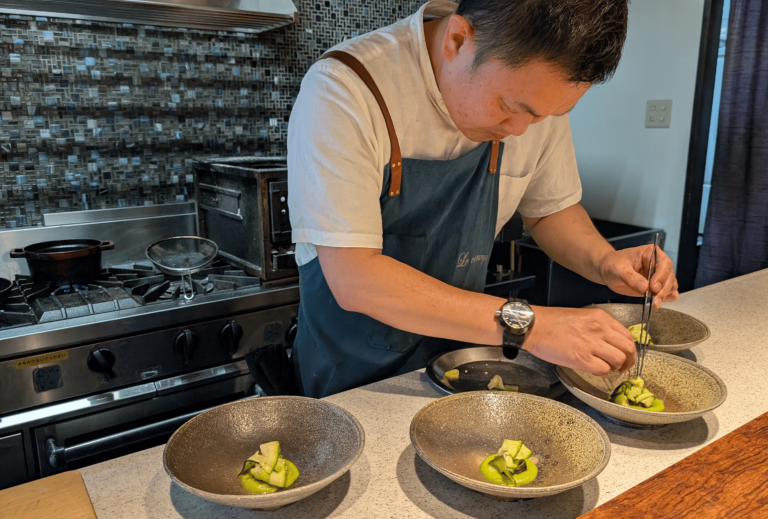
For a closer look at where the ingredients themselves come from, one tour takes you to meet the producers behind an award-winning chef’s seasonal menu: Farm to Table on the Chita Peninsula | Meet Local Producers with an Award-Winning Chef — From Nagoya
Those who’d rather experience it all in one sitting can pair a pottery studio visit with a historic sake brewery tour and a tasting lunch from the same chef: Chita Peninsula Gastronomy Journey | Sake Brewery, Tokoname Pottery & Lunch by an Award-Winning Chef — From Nagoya
With a sense of what Tokoname offers, here’s what to know before building it into your trip.
Tokoname is about 40 minutes from central Nagoya by train, and just 5 minutes from Chubu Centrair International Airport, making it easy to fold into a wider Central Japan itinerary whether you’re arriving, departing, or based in Nagoya for a few days. Nagoya itself sits in Central Japan, about 1 hour and 40 minutes from Tokyo and 40 minutes from Kyoto by shinkansen.
Walking the Pottery Path and exploring its shops and galleries can be done in a relatively short visit. Add one or more artisan studio visits and it becomes a solid half-day trip; because most working studios aren’t set up for casual drop-ins, visiting them is best arranged through a tour rather than attempted independently. Combine artisan visits with a hands-on pottery experience, or pair pottery with a sake brewery and a chef-led meal, and the day fills out naturally.
For those who’d rather not compress it all into a single day, it’s also possible to stay overnight right on the Pottery Path itself, in a restored traditional house roughly 130 years old, waking up in the middle of the district you spent the previous day exploring.
Tokoname rewards a particular kind of traveler. If you’re drawn to pottery or ceramics, or already keep bonsai of your own, this is one of the best places in Japan to see where that craft actually comes from. The same goes for anyone interested in craft, design, or architecture more broadly, or anyone who’d rather understand who made something and how than simply admire the finished piece.
It also suits travelers who want to go deeper into a living culture and meet the people carrying it forward, along with those with an interest in local food, sake, and fermentation on the side.
Tokoname is less suited to travelers who want to move quickly between famous landmarks. It rewards time spent talking to a single artisan or wandering without a fixed plan, more than it rewards a checklist of sights.
The artisans, studios, and experiences described here are only a starting point. Tokoname offers a wide range of ways to explore its pottery culture, from teapot and bonsai pot artisans to hands-on pottery experiences, tea, sake, and food, all built on real relationships with the makers and producers who call this town home.
If you have a question about the programs, talk with us about experiences in Tokoname and available options
Not ready to book yet? Follow us on Instagram for travel tips, Tokoname experience highlights, and Japan itinerary ideas to help you plan your perfect trip.

I’m a nationally licensed English-speaking guide with over 10 years of experience leading tours across Japan. Growing up in Nagoya and having lived abroad, I bring both insider familiarity and an outsider’s curiosity to every trip.
Beyond guiding, I design and plan tours from the ground up — handling everything from itinerary building to logistics and on-the-ground coordination. That dual perspective, from both inside the experience and behind the scenes, shapes how I write about travel in Central Japan.
